NEWS & EVENTS | News
June 17, 2026 | The Gray Zone with Judy Davidson
Judy Davidson discusses Leslie Stainton’s groundbreaking memoir Scarlet: Slavery’s Enduring Legacy in an American Family, with the author in honor of the Juneteenth celebrations. “I hope you enjoy listening to it, as much as I enjoyed interviewing Leslie about this important work.”
June 4, 2026 | Foreword
Leslie Stainton’s Scarlett has been awarded the Foreword 2025 Bronze INDIES Book of the Year Award in both the Historyand the Autobiography & Memoir categories. The INDIES celebrate outstanding books published in 2025 by small, independent, and university presses.
“Each year, as our number of entrants increases and diversifies, the job of narrowing each genre category to a select few finalists gets harder,” notes Editor-in-Chief Michelle Schingler. “But that also makes the judges’ ultimate selections all the more exciting. We so look forward to their final choices, and we are so proud to celebrate this year’s exemplary slate of winners.”
Stainton’s publisher, University of Nebraska, Potomac Press, has been awarded the 2025 Foreword INDIE Publisher of the Year.
April 19, 2026 | C-SPAN BookTV | Leslie Stainton, Scarlett
Author Leslie Stainton discusses slavery’s enduring legacy, including the complicated history of her own enslaving Georgia ancestors, with veteran journalist John Woodford. The conversation is scheduled to air on C-SPAN’s BookTV, Sunday, April 19th, at 4:55pm Eastern. After its first airing, the program will be available here: Leslie Stainton, Scarlett | Video | C-SPAN.org
February 23, 2026 | St. Andrew’s Church, Ann Arbor | Scarlett
In this conversation about American slavery and its lasting impact, author and Scarlett family descendant Leslie Stainton is joined by Ann Arbor councilperson Chris Watson in a discussion of slavery’s enduring legacy. This event is ideal for readers interested in both history and the complex, often difficult role one family has played in it.
Watch the discussion below or here. (1:07.02 hours)
February 19, 2026 | The Sun Times News | “U-M Professor Confronts Her Family’s Slaveholding Past in Scarlett” by Cynthia Furlong Reynolds. In her new book, Leslie Stainton documents kidnapping, abuse and racial violence embedded in her family’s plantation history.
“Stainton’s no-holds-barred tell-all, Scarlett: Slavery’s Enduring Legacy on an American Family, was published, to acclaim. ‘I want readers to know the truth about plantation life. Gone with the Wind is an absolute lie.’
“It wasn’t easy to remain objective and reveal shocking family secrets, she admits. ‘But once I started researching slavery, I realized the truth had to be known, no matter how shameful or painful to my family. As I wrote, I felt I was uncorking a lamp and having Aladdin appear.’
“Scarlett has been a long time in the making. From the time she was a child, Stainton (who was raised north of the Mason-Dixon line) knew that her Georgia-born grandmother, Mary ‘Mamie’ King Hilsman Pettigrew, was collecting materials and stories related to the family history in Glynn County, Georgia—most of which the Scarletts owned, along with more than 500 enslaved persons. In fact, Margaret Mitchell named her heroine after the Scarlett family, as she admitted to Mamie.”
Read the entire article here.
February 3, 2026 | Lights, Action, Author! | podcast host Jim Junot in conversation with author Leslie Stainton.
Listen to the episode below or via Spotify (21:17 min)
January 27, 2026 | Georgia Public Radio | Narrative Edge podcast hosts Peter Biello and Orlando Montoya in conversation with author Leslie Stainton.
In this episode, we discuss Scarlett: Slavery’s Enduring Legacy in an American Family, a work of creative nonfiction that traces one white family’s deep ties to slavery on Georgia’s coast. By linking plantation history to present-day violence in Brunswick, the book shows how the legacy of slavery continues to shape life in Georgia today.
Listen to the episode below or via GPR’s site. (14:36 min)
October 31, 2025
In a pre-publication session in October, I spoke on the podcast The Last Negroes at Harvard. It was a lively session with an engaging and thoughtful group of Harvard grads, some of whom are working on their own ancestral history of enslavement. A recording of the event will be available online.
Scarlett will be featured on Deborah Kalb’s blog, Book Q&As with Deborah Kalb.
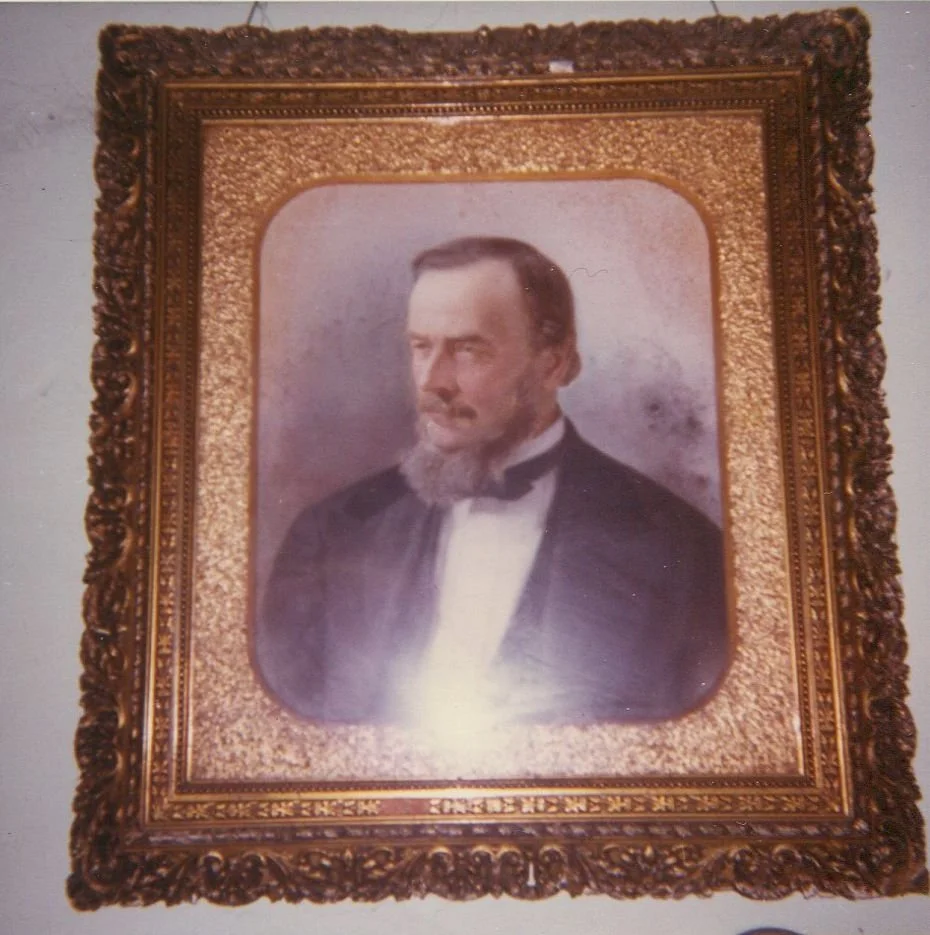
John Mason Tison
The remaining Scarlett archival materials—including this daguerreotype, shown here, and multiple other photographs featured in Scarlett—will be sent to the Georgia Historical Society in 2026 as part of the Scarlett-Tison family collection. Last spring I donated the bulk of my personal Scarlett archive to GHS, where the collection is called the Scarlett-Tison family collection. I hope future researchers will benefit from this resource, and I encourage others with access to family papers and items to reach out to relevant archives. This is especially crucial in tracing the history of slavery in the United States, and in particular the history of enslaved African-American, whose lives and very names have too long been obscured.
Last June, Scarlett was introduced at the national gathering of Coming to the Table. The book was also introduced at the 2025 reunion of the Hippard-Blue-Bell Family Reunion in Brunswick, Georgia, in July.
Scarlett will be introduced at the 2025 reunion of the Hippard-Blue-Bell Family Reunion in Brunswick, Georgia, in July, and was introduced at the national gathering of Coming to the Table in June.
While visiting Savannah briefly in March, I donated the bulk of my personal Scarlett archive to the Georgia Historical Society, where the collection will be called the Scarlett-Tison family collection. I hope future researchers will benefit from this resource, and I encourage others with unique family papers and items to reach out to relevant archives. This is especially crucial in tracing the history of slavery in the United States, and in particular the history of enslaved African Americans, whose lives and very names have too long been obscured.

Photograph by Philip Wu Jr.
During a visit to Brunswick, Georgia, in March, I met with leaders of BRAG (Bicycle Riding Across Georgia), an organization that among many other great things, conducts a monthly ride dedicated to the memory of the late Ahmad Arbury. It’s called “I Ride with Maud,” and I was honored to meet that month’s team, which included Ahmad Arbery’s father, Marcus, and uncle, Gary.
In February, I spoke by Zoom to Rachel L. Swarn’s class at New York University. The class, “Reporting on Racial Justice,” connects students to writers who are exploring the history of slavery and racial violence in their families. Rachel is the author of The 272: The Families Who Were Enslaved and Sold to Build the American Catholic Church.
On President’s Day 2025, I spoke at a book launch for What the Presidents Read: Childhood Stories and Family Favorites, co-edited by Elizabeth Goodenough and Marilyn S. Olsen. The collection includes my essay “Reading Buchanan,” about Buchanan, John Updike, and my performance as Harriet Lane in the premiere of Updike’s Buchanan Dying. Buchanan’s failure to address the crime of slavery ultimately led to a civil war culminating in the emancipation of enslaved Americans.